


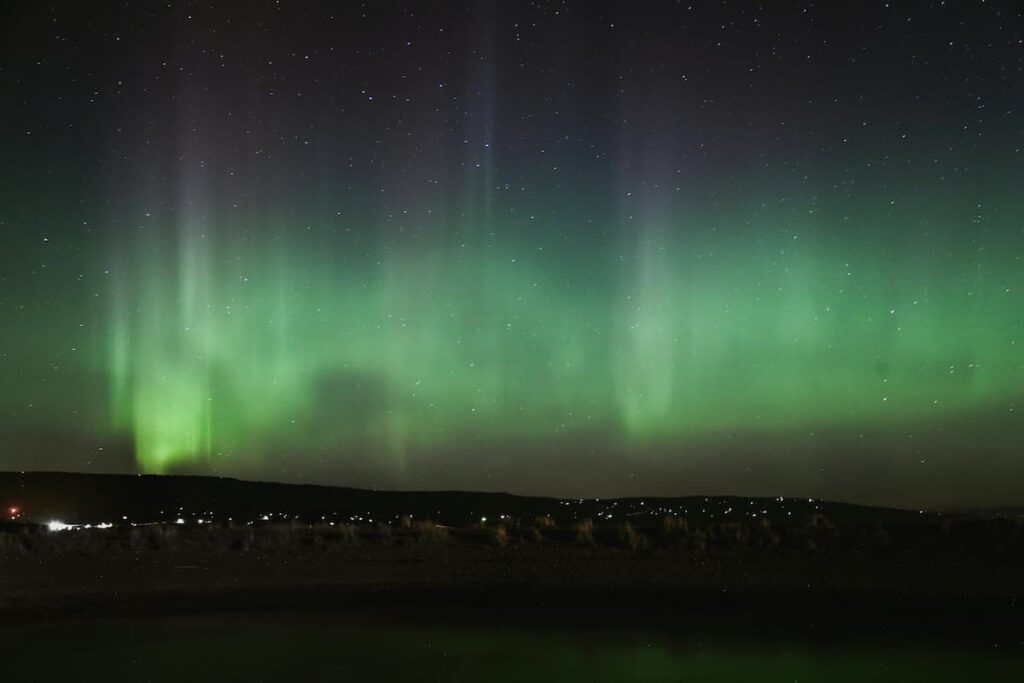
A fresh round of aurora activity could light up the night sky late Friday, May 15, and continue into the early hours of Saturday, May 16, thanks to a minor geomagnetic storm forecast by NOAA.
According to forecasters, a stream of fast-moving solar wind escaping from a coronal hole on the sun is expected to interact with Earth’s magnetic field, potentially creating visible auroras across parts of Canada and the northern United States.
The aurora borealis forms when charged solar particles collide with gases in Earth’s upper atmosphere, producing shimmering bands of green, red, and sometimes purple light. Visibility can vary depending on cloud cover, location, and the strength of the geomagnetic activity.
This weekend’s new moon may also improve viewing conditions. With less moonlight brightening the sky, faint auroras could become easier to spot in rural areas with minimal light pollution.
Best Time to See the Aurora
Skywatchers will have the strongest chance of spotting the northern lights from late Friday night into pre-dawn Saturday, especially during the darkest overnight hours.
NOAA says minor G1 geomagnetic storm conditions remain possible as elevated solar wind continues to affect Earth’s atmosphere. Aurora activity often peaks around local midnight, though displays can intensify or fade quickly depending on changing space-weather conditions.
States That Could See the Northern Lights
If skies remain clear and geomagnetic activity strengthens as expected, the aurora may become visible along the northern horizon in several states, including:
- Alaska
- Washington
- Idaho
- Montana
- North Dakota
- South Dakota
- Minnesota
- Wisconsin
- Michigan
- Maine
Parts of southern Canada are also expected to have favorable viewing conditions.
For the best experience, experts recommend heading to remote areas away from city lights with an unobstructed view of the northern sky.
Tips for Watching the Northern Lights
Finding a dark location is key. Light pollution can make weaker auroras difficult to see, even during active geomagnetic conditions.
NOAA’s real-time aurora forecast tools and space-weather tracking apps can help monitor changes in solar activity throughout the night. Checking local cloud forecasts is also recommended before heading out.
How to Photograph the Aurora
Capturing the northern lights doesn’t necessarily require professional camera equipment. Many modern smartphones can produce solid results using long-exposure settings.
To improve your chances of getting a clear shot:
- Use Night Mode or Pro Mode on your phone
- Keep the camera as steady as possible with a tripod or stable surface
- Avoid bright nearby lights
- Experiment with longer exposure times for brighter colors
Dedicated cameras with manual settings and long exposures will typically produce the sharpest and most vibrant aurora photos, but smartphones can still capture impressive images under strong displays.
