


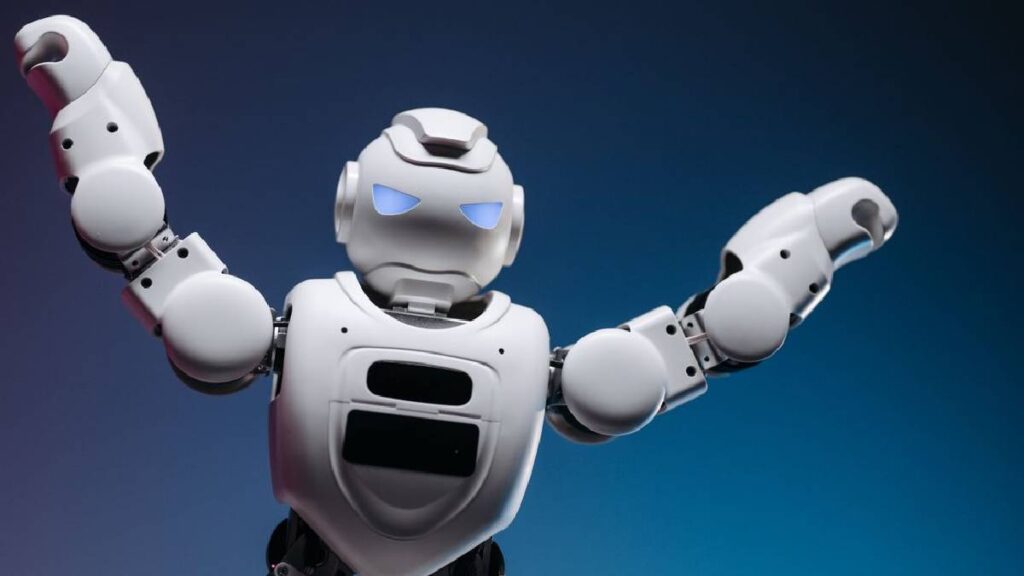
Recently, visitors strolling through Brooklyn Bridge Park in New York encountered an unexpected sight: a humanoid robot weaving among the crowd as children ran beside it, laughing. A bystander captured the moment on video, and clips of the scene quickly spread across social media. The robot was the Unitree G1, a 4-foot-3, 77-pound machine developed by China’s Unitree Robotics, capable of reaching speeds of up to 7.4 miles per hour. The appearance follows recent attention around a similar robot that made headlines during a White House education summit hosted by Melania Trump.
Once the video surfaced online, especially on X, tech enthusiasts and uneasy skeptics quickly began sharing it and debating what it means to see robots like this in everyday public spaces. Interest grew even further because the park footage appeared just two days after the White House summit, where Melania Trump introduced a Figure 03 robot on stage during a discussion about AI in schools.
In the video, the Unitree G1 moves at a relaxed jogging pace as children dart around it and adults stop to record, their faces showing a mix of amazement and confusion. The atmosphere is playful and curious, but it is clear that many adults were not quite sure what to make of the scene.
What makes the moment even more striking is that the Unitree G1 is not designed as street entertainment. It is marketed as a tool for researchers and educators, with the education model priced at around $44,000.
It remains unclear who was controlling the robot in the New York park, or whether it was operating autonomously or by remote control. Just days earlier, a Figure 03 robot appeared before representatives from 40 countries at the White House and said it was “honored to be part of this historic movement to empower children with technology,” fueling renewed debate about the role of robots and AI in classrooms.
The Internet Has Mixed Reactions to a Humanoid Robot in New York
Online reactions revealed a sharply divided audience. Some users expressed awe at the speed of technological progress.
“I wonder what 2050 is going to look like, genuinely.”
“This is pretty impressive tech, but it still feels a bit Black Mirror, excited for the future or lowkey terrified.”
A more sobering response also gained significant attention.
“We’re normalizing this so fast that our kids won’t even question it; that’s the scary part.”
The park video went viral because it captures something that feels both genuinely astonishing and oddly ordinary: a robot casually moving among children and tourists, just another strange detail in a busy New York park. Add the timing, as the White House begins emphasizing AI robotics in education, and the moment no longer feels like science fiction. It feels like real life, unfolding on a random Thursday in Brooklyn.
