


For decades, homeowners have relied on real estate agents to sell their properties. Agents schedule showings, handle paperwork, negotiate details, and guide sellers through what is often one of the largest financial transactions of their lives. Despite advances in technology, the traditional home-selling process has remained largely the same. Now, however, that may be changing. As AI tools become more sophisticated and widely available, some homeowners are beginning to wonder whether a chatbot can handle many of the responsibilities typically managed by a real estate agent. One father in Florida decided to put that question to the test—and his results may have left many in the real estate industry feeling uneasy.
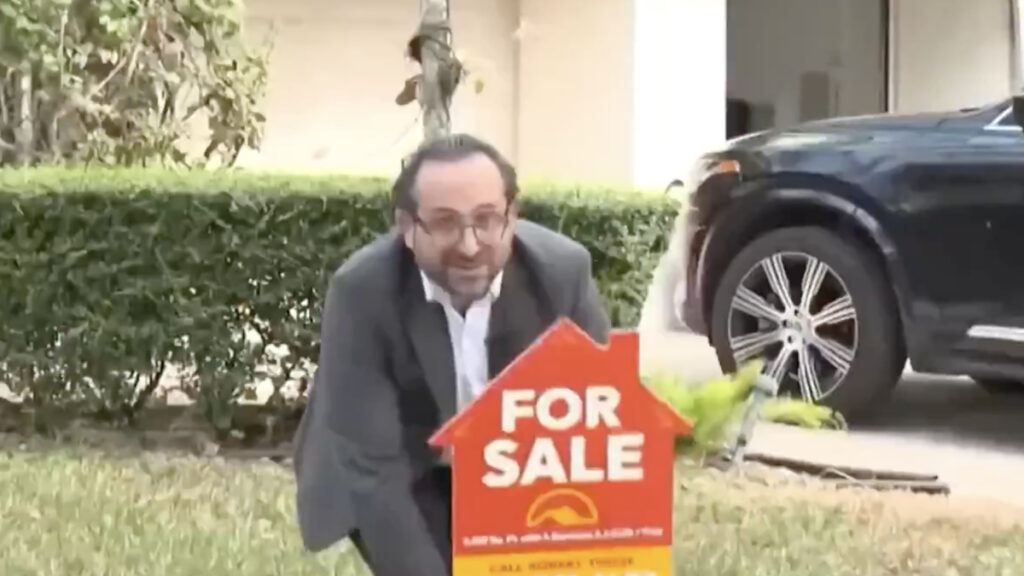
Robert Levine, a father of three from Cooper City, Florida, sold his home in just five days—without the help of a real estate agent. Instead, he entrusted the entire process to ChatGPT.
After 15 years in the home, Levine finally felt ready to move on. But rather than making the customary call to a real estate professional, he decided to let AI oversee the entire process. “I really wanted to challenge myself to use AI for the entire journey, not just piecemeal,” Levine told NBC 6.
He entrusted ChatGPT with every stage of the process, from planning and pricing to marketing and even drafting the contract.
The advice was practical, insightful, and easy to follow. ChatGPT recommended repainting specific rooms to help maximize the home’s value and then created a comprehensive selling timeline, including when to start packing. It covered every detail—from open house flyers and the online listing to the best day to put the house on the market, even suggesting a Tuesday.
Within three days, Levine had received five offers. He still went ahead with the scheduled open house on Saturday, and by Sunday morning—just five days after the listing went live—he had already signed a contract. ChatGPT also helped draft the agreement.
Levine hired a lawyer to conduct the final legal review, but otherwise allowed the AI to manage the remainder of the process. This approach likely saved his family approximately 3% of the sale price, amounting to a substantial sum.
Internet Reacts as Florida Father Sells His Home in Five Days with ChatGPT’s Help
The story quickly sparked debate online, with many users speculating about what it could mean for the future of real estate. “AI isn’t replacing everyone, but some industries should definitely be worried,” one person wrote, suggesting that the technology could significantly disrupt certain professions.
Others emphasized the financial upside of eliminating traditional real estate commissions. “AI just made selling a house faster than most people can find a roommate,” one user wrote. Another noted, “The 3% commission savings alone on a median-priced home amounts to roughly $12,000. AI just became the best realtor in the country—and it works for free.”
Some commenters emphasized the technology’s broader significance beyond cost savings. “Anyone with curiosity can now access professional-level market analysis and contract expertise. That kind of democratization matters more than the 3% in savings,” one person wrote.
Others were skeptical of the hype, arguing that the situation may not be as groundbreaking as it seemed. “If he got that many offers that quickly without a broker, then maybe he had it listed too low. Maybe a broker could have gotten him more, even after accounting for the fee,” one commenter wrote.
Another added, “Bro, do you realize you could always sell your house by yourself? This isn’t revolutionary,” while a third suggested, “The house was probably undersold. And the cost of the lawyer was probably comparable to a commission.”
Florida’s real estate market rarely slows down. Recently, Robert Levine demonstrated just how quickly things can move when he closed a home sale in Cooper City in only five days—with the help of a chatbot. Perhaps this is a glimpse into the future of real estate. Or perhaps it was simply a fortunate outlier.
