


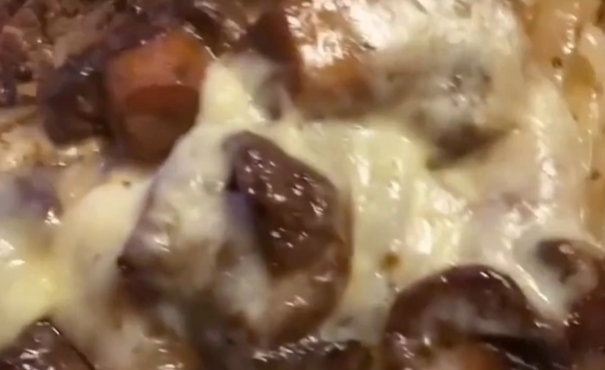
It’s becoming harder than ever to distinguish what’s real from what’s artificial when it comes to food these days. In many cases, preparing a quick, home-cooked meal feels like a safer and more transparent option than dining out and questioning what’s actually on your plate. Recently, a man publicly accused a Texas Roadhouse restaurant in New Jersey of serving him what he claimed was a “fake steak.”
The man took to Instagram to criticize the restaurant. “If you wanna live longer, don’t come to Texas Roadhouse cause they’ll give you fake steak like this that is glued together. [expletive] is disgusting, bro,” he alleged, using a fork to pull the steak to prove his point. Someone in the background asked, “Where do you see the glue?” right before the video stopped.
Some users who had probably been victims of the crime came guns ablazing with accusations in the comments. “This is exactly why people are waking up. They’ve replaced real cattle with Transglutaminase (meat glue) and ammonia-treated scraps,” one alleged. “I make a lot of ribeyes, and they have never looked like that. That is bio-engineered meat, they just passed for sale,” another confirmed. “If you want to live longer, don’t eat food from the USA, period,” one user wrote, pointing out that it was a nationwide problem. “I no longer trust the United States’ food source,” another echoed.
“Welcome to 2026, where your dinner has more ‘chemistry’ than your last relationship,” one user joked. “Why are people still eating at chain restaurants? Of course, it is substandard. It’s a trap for busy people. It’s disgusting food almost anywhere you go,” another user wrote.
“That ‘glue’ is the tail of a ribeye steak. It’s full of grizzle and is stretchy, but full of flavor. Jesus, people,” one other user explained. “That’s not fake, that is the fat maybe lining of the cow’s belly,” one netizen noted. “Calling BS on that. It’s called a really tender steak. Try using a knife instead of just pulling it apart,” another wrote.
Overall, what began as a simple disagreement over whether a steak was “fake” soon transformed into a wider conversation about food quality, customer expectations, and the importance of culinary knowledge. The variety of responses demonstrated not only the power of social media to amplify differing perspectives but also how quickly humor, skepticism, and genuine curiosity can mix when people try to uncover the truth behind a viral post.
